Your Guide to Buying an Apartment in Berlin
So, you've been typing "Wohnung zu kaufen" into search bars, with your heart set on Berlin. Good choice. The simple truth is that Berlin’s property market is still one of the most dynamic and attractive in Europe, offering real long-term value even with the recent market ups and downs. It's a city that manages to be both historic and cutting-edge, making it a brilliant place to call home and a smart place to put your money.
Why Buying an Apartment in Berlin Still Makes Sense
Berlin's property scene has its own unique rhythm. Compared to other major European capitals, it strikes a rare balance of relative affordability, an incredible quality of life, and massive potential for growth. For internationals, the city is a magnet—the expat community is huge, and the culture is so open that it genuinely feels easy to settle in.
Thinking about buying a flat here is about more than just bricks and mortar. It’s an investment in a certain kind of lifestyle, in a city that’s always changing and evolving. From its legendary cultural scene to its endless green spaces, Berlin just gives you room to breathe and grow.
What's Happening in the Market Right Now?
Let's talk numbers. The German residential property market is bouncing back, and it's doing so with confidence. In the first half of 2025 alone, the number of property transactions shot up by 41% compared to the same period last year. That’s a clear signal that buyers are back in the game.
While Germany's biggest cities saw a modest price bump of 0.4%, Berlin is really the one to watch. Over the last five years, apartment prices in the capital have climbed by an impressive 16.6%. This isn't just a recovery; it shows that demand here is exceptionally strong. If you want to dive deeper, you can discover more insights about the German property market from Periskop.
What’s fuelling this? It boils down to simple economics: more people want to live in Berlin than there are flats available. This classic supply-and-demand situation creates a really stable foundation for property values, making a Wohnung zu kaufen in Berlin a solid long-term move.
Our Takeaway: Don't get spooked by sensational headlines about market shifts. Berlin has a proven track record of long-term growth, built on fundamentals that aren't going anywhere. You're not just buying a property; you're investing in a city that people will always want to call home.
The Key Players on Your Property-Buying Team
Getting through the German property buying process is a team sport. Knowing who does what will make the journey a whole lot less stressful, especially if you're navigating it as an international buyer.
Here are the people you absolutely need in your corner:
Real Estate Agent (Makler): This is your expert on the ground. A good agent doesn’t just find properties and arrange viewings; they’re your chief negotiator and cultural translator. For non-German speakers, a bilingual agent from a team like ours at The Property Connection is a game-changer.
Mortgage Advisor (Finanzberater): This is the person who will hunt down the best mortgage for you. They have access to multiple banks and can navigate the complexities of the German financing system, which can be tricky for outsiders.
Notary (Notar): In Germany, the Notar is a neutral, state-appointed legal professional whose involvement is mandatory. They draft the final purchase contract, check all the legal paperwork, and officiate the signing to make sure everything is 100% legally binding and fair to both sides.
Having a team you can trust transforms the experience from daunting to manageable. To give you a bird's-eye view, we've broken down the main stages of the process into a simple table.
Berlin Property Buyer At a Glance
Here’s a quick snapshot of the journey ahead. Think of this as your roadmap from initial research to finally getting the keys to your new Berlin home.
Phase
Preparation & Finance
The Hunt
Making Your Move
Making It Official
The Final Stretch
Key Action
Get your financing pre-approved.
Find a property and inspect it thoroughly.
Submit a formal offer and negotiate.
Attend the Notary appointment.
Pay the purchase price & taxes.
Main Consideration
Knowing your budget is non-negotiable. It's step zero.
Look past the fresh paint. Check the building's core health.
This is where a sharp, experienced agent really pays off.
The deal becomes legally binding.
Once the funds are transferred, you get the keys and it's all yours!
Each phase has its own set of details and potential hurdles, but understanding the big picture helps you stay focused and in control throughout the process.
Finding Your Perfect Berlin Kiez
Berlin isn't just one city. It’s more like a cluster of unique villages, each with its own rhythm and personality. Finding the right 'Kiez'—your local neighbourhood—is every bit as important as finding the perfect apartment. It's about matching a place's vibe to your lifestyle, and this is where the search for your Wohnung zu kaufen gets really fun.
Let's move past the generic descriptions. We're going to dive into the real feel of some of Berlin's most popular areas to help you picture where you might fit in best.
Altbau Charm Versus Neubau Convenience
Before you even start looking, you’ll hear two words everywhere: Altbau (old building, usually pre-WWII) and Neubau (new building). They represent two totally different ways of life in Berlin.
Altbau living is the classic Berlin dream. Think high ceilings, original wooden floors, huge windows, and maybe some ornate stucco details. The trade-off might be older plumbing or no lift, but for many, that character is priceless.
Neubau living is all about modern comfort. We're talking underfloor heating, energy efficiency, sleek balconies, and, yes, a lift. They're practical and well-insulated, though they sometimes lack the historic soul of their older cousins.
Your preference here will shape your search, as certain neighbourhoods are packed with one style over the other.
A Quick Tour of Three Distinct Neighbourhoods
Berlin's incredible diversity is its greatest strength, and you see it most clearly in its Kieze. While there are dozens of fantastic areas, let's look at three that really showcase this variety.
For Families and Green Space Lovers: Tempelhof Just south of the city centre, Tempelhof feels like a breath of fresh air. It offers a calmer, more relaxed pace of life, with its crown jewel being Tempelhofer Feld—the massive park that was once an airport. It's an absolute paradise for cyclists, skaters, and families spreading out picnic blankets.
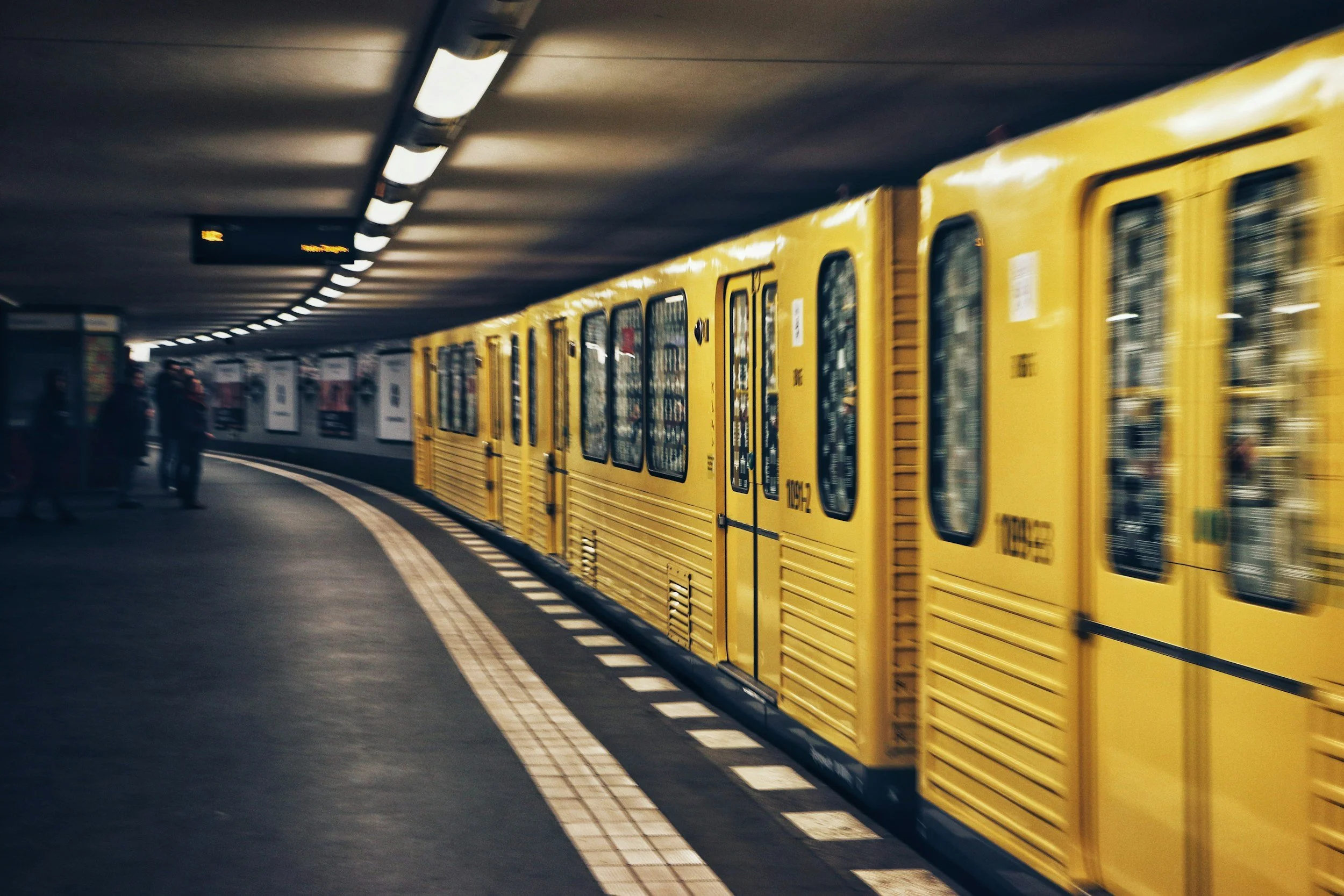
The housing here is a mix of classic 1920s apartment blocks and some single-family homes, giving you more space for your money than you'd find further in. It has a peaceful, almost suburban feel, yet it’s brilliantly connected by the U6 U-Bahn, whisking you to Friedrichstraße in about 15 minutes.
For the Creatives and Night Owls: Friedrichshain If you want to be right in the middle of it all, Friedrichshain is your spot. This eastern district is famous for its buzzing nightlife, incredible street art, and endless independent shops. Areas like Boxhagener Platz are alive with cafés, bars, and a legendary Sunday flea market.
Friedrichshain is classic Altbau territory, with street after street of beautifully renovated buildings. It’s energetic, young, and always changing, which also makes it a solid area for property investment as demand is consistently high.
For a Cultural Melting Pot: Kreuzberg is legendary for a reason. It’s a diverse, multicultural hub with an unapologetically alternative spirit. From the bustling Turkish market along the canal to the independent art galleries and iconic music venues, Kreuzberg is a feast for the senses.
It's a place of stark contrasts, where leafy, elegant streets sit right next to gritty, graffiti-covered blocks. This vibrant mix makes it one of Berlin’s most fascinating places to live. The key to finding a place here is to explore its many micro-neighbourhoods to find the pocket that feels like you.
Expert Tip: Don't just visit a Kiez on a sunny afternoon. Go back at night. Go back on a weekend. The entire atmosphere can shift, and you'll get a much more honest picture of what it's really like to live there.
A Quick Market Reality Check
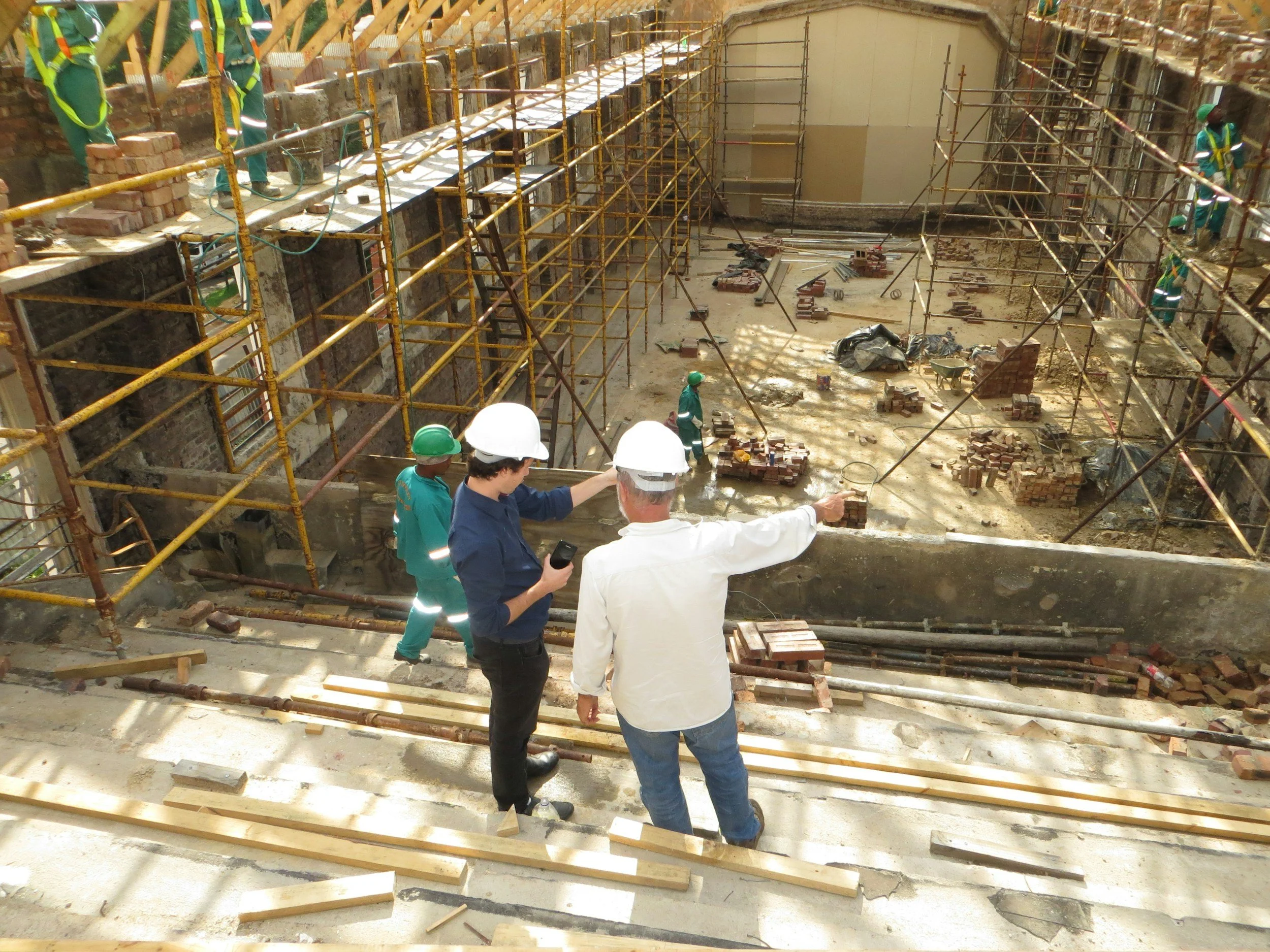
Getting to know the neighbourhoods is crucial, but you also need to understand what's happening in the market right now. Construction across Germany has slowed dramatically, creating a serious lack of housing. In 2024, only 215,920 building permits were issued—that's a 17% drop from the year before.
This supply-and-demand crunch is especially tight in a city like Berlin, making the hunt for a home more competitive than ever. You can read the full analysis of Germany's housing supply issues from Global Property Guide.
What does this mean for you? When you find an apartment you love, you have to be ready to move. Once you've zeroed in on your favourite Kiez, you can explore our current Berlin property listings to see what's out there. In a market this tight, being prepared is your biggest advantage.
Sorting Out Your Mortgage and The Extra Costs
Alright, let's get down to the brass tacks: the money. This is the part of the journey where your dream of owning a place in Berlin gets real. For anyone looking for a Wohnung zu kaufen, especially from abroad, the German mortgage system can feel a bit like a maze. But trust me, it’s far less intimidating once you know how it works.
First things first, you need what's called a Finanzierungsbestätigung (financing confirmation). Think of it as your golden ticket. It's a formal letter from a German bank saying they're ready to back you up to a specific amount. Without it, sellers and agents simply won't take your offer seriously. It shows you’re a serious buyer, not just a window shopper.
Getting Your Financial Ducks in a Row
To get that confirmation, a lender needs to see your complete financial picture. They're looking for a story that says you're a safe bet, especially if your financial life is mostly outside of Germany.
You'll need to pull together a few key documents:
Proof of Income: Your last three payslips and your latest annual tax return usually do the trick.
Bank Statements: They want to see your savings—specifically the cash you’ve set aside for the down payment and all the extra costs.
Your SCHUFA Score: This is Germany's credit rating. A solid score is your best friend when it comes to locking in a good interest rate.
ID: A copy of your passport and, if you live here, your German registration certificate (Anmeldebestätigung).
Your down payment, or Eigenkapital, is a huge piece of the puzzle. While you might hear stories of lower amounts, the standard expectation is to put down at least 20% of the purchase price. For non-EU citizens, some banks might even ask for 30-40%, plus enough to cover all the closing costs on top.
A Pro Tip From Experience: Don't just wander into your local bank. A good mortgage broker in Germany can be a game-changer. They work with dozens, sometimes hundreds, of lenders and can often find interest rates you'd never get on your own. This is especially true for international buyers whose situations are often a bit more complex.
Don't Forget the 'Nebenkosten'
This is a big one, and something every first-time buyer in Germany needs to wrap their head around: the price on the listing is not the total price you'll pay. You need to factor in the Nebenkosten, or closing costs. These aren't small change; they add a significant chunk to your total bill, and you need to have this money ready in cash.
These costs are set by law and calculated based on the final purchase price in the contract. Ignoring them is probably the single biggest financial mistake you can make in this process.
A Real-World Cost Breakdown
Let's make this real. Say you've found the perfect apartment in Friedrichshain for €500,000. Here’s a quick rundown of what those extra costs will actually look like:
Cost Item
Property Transfer Tax
Notary & Land Registry Fees
Real Estate Agent Commission
Total Closing Costs
% of Purchase Price
6% (in Berlin)
~2%
3.57% (incl. VAT)
~11.57%
Calculation
0.06 x €500,000
0.02 x €500,000
0.0357 x €500,000
Amount
€30,000
€10,000
€17,850
€57,850
That’s right. For that €500,000 apartment, you’re looking at an additional €57,850 just to seal the deal. This pushes your total upfront cost to €557,850, and that’s before you've even made your first mortgage payment. This is exactly why you need a crystal-clear budget from the very beginning.
From Your Offer to the Notar: Nailing the German Purchase Process
You’ve found it. After what feels like a hundred viewings, you’ve finally landed on the one Wohnung that clicks. Your financing is sorted. So, what’s next? Brace yourself for the very structured, uniquely German process of getting those keys in your hand.
For many internationals, this part of the journey can feel a bit rigid and intimidating. But once you get the hang of who does what, you'll see it’s actually a rock-solid system designed to protect everyone involved. Let's walk through how you go from a handshake deal to the all-important notary appointment.
Making an Offer and Securing the Deal
When you're ready to make your move, the offer is usually passed to the seller through the real estate agent, either verbally or in writing. Once you’ve settled on a price, the next step is often a Reservierungsvereinbarung—a reservation agreement. Just be aware, this isn't the final, legally binding contract.
Think of this agreement as a formal "I'm serious." You'll typically pay a small deposit, usually between 0.5% and 1% of the purchase price, to take the property off the market for a little while. This fee almost always goes toward the agent's commission later on. It shows good faith and gives you the breathing room to get all your ducks in a row.
A Quick Word of Advice: Always read the fine print on the reservation agreement. Make sure it’s crystal clear about what happens to your deposit if the deal falls through for reasons beyond your control, like the seller suddenly changing their mind.
The Notar: The Most Important Person in the Room
Here’s a non-negotiable fact of German property law: you can't buy or sell a property without a Notar. They are highly qualified, state-appointed lawyers who act as a neutral referee. Their job isn't to take your side or the seller's; it's to make sure the entire deal is legally watertight and fair for both parties.
The Notar handles some of the most critical steps:
Drafting the Purchase Contract: They put together the official Kaufvertrag (purchase contract) based on the terms you've agreed upon.
Checking the Legal Nitty-Gritty: The Notar digs into the Grundbuch (land register) to confirm the seller is the rightful owner and that there are no nasty surprises like hidden debts attached to the property.
Making it Official: They preside over the final signing meeting, reading the entire contract out loud to ensure everyone understands exactly what they're signing.
Navigating the journey from offer to getting the keys can feel like a maze. For a full breakdown, check out our detailed guide on the entire process of buying property in Berlin.
What to Expect at the Notary Appointment (Notartermin)
The Notartermin is the main event. You, the seller, and any agents will meet in the Notar's office to sign the Kaufvertrag. The Notar will read the entire contract aloud—in German. This is a big deal. If your German isn't up to scratch, you are legally required to bring a certified translator or have the contract officially translated beforehand. You absolutely must understand every single clause.
After the reading, any last-minute questions are cleared up, and then you both sign on the dotted line. The moment you sign, the deal is legally binding. No going back. From there, the Notar takes over, registering your intent to purchase in the land register and letting you know precisely when it's time to transfer the money.
The infographic below really drives home the point that the purchase price is just the starting point for your budget.
As you can see, those closing costs, or 'Nebenkosten', are a significant chunk of change that you absolutely have to factor into your financial planning from day one.
Right, you’ve signed the contract at the Notar’s office. Take a moment to celebrate – that’s a massive step forward! But don't pop the Sekt just yet. The journey from signing the dotted line to actually getting the keys to your new Wohnung in Berlin involves a few more crucial stages.
This next phase is where the Notar really earns their fee, acting as the neutral go-between to make sure everything happens in the right order. Think of them as the project manager for the final legal and financial steps. After you sign, you won't hear from them immediately. They first have to get a priority notice (Auflassungsvormerkung) logged in the land register. Once that's sorted, they'll send an official payment request your way.
Paying Up and Making It Official
You’ll soon have two very important bills to pay. First, the big one: the purchase price itself. You’ll transfer this directly into the seller's bank account as instructed by the Notar.
At roughly the same time, another letter will land on your doormat from the Finanzamt (tax office). This is for the property transfer tax, or Grunderwerbsteuer. In Berlin, this is a hefty 6% of the purchase price, and you absolutely cannot drag your feet on this one. The tax office won't issue a clearance certificate (Unbedenklichkeitsbescheinigung) until they have your money. And without that certificate, the Notar is legally blocked from making the final, official change in the land register that names you as the new owner.
My Advice? Pay these two bills the second you get them. Seriously. Any delay on your part just pushes back the day you get your keys and officially own the property. Everything else is on pause until the money is transferred.
The Big Day: Your Handover Checklist
Once the seller confirms the money's in their account and the Notar has the tax clearance, it’s time for the Übergabe – the handover. This is it! This is when you physically get the keys and take possession of your new place.
But it’s not just a quick "here are the keys, good luck!" moment. It's a formal inspection, and you should document everything in a handover protocol, or Übergabeprotokoll. Don't let excitement rush you through this.
Here’s what I always tell my clients to double-check:
Meter Readings: Get your phone out and take clear photos of the electricity, water, and gas meters. Write the numbers down in the protocol, too. This is your proof of the starting point for your bills.
Key Count: Make sure you get all the keys. The protocol should list exactly how many keys there are for the apartment door, the cellar, the postbox, and any shared building entrances. Count them.
Fixtures and Fittings: Remember that fitted kitchen (Einbauküche) or those specific light fixtures you agreed would be included in the sale? Walk through and make sure they're still there and in the condition you remember.
General Condition: Do one last sweep for any new damage. A wall scuffed by movers, a new crack in a tile – point it out now and get it noted in the protocol.
Life as a Berlin Property Owner
Keys in hand, you're officially a Berlin property owner. First things first: get the utilities switched over to your name immediately. You don’t want to be left in the dark or without water. You're also now part of the homeowners' association, the Wohnungseigentümergemeinschaft (WEG), and you'll start paying the monthly Hausgeld (building service fees).
If you're an investor, this is when your property manager takes over. If this is your new home, it’s time to start meeting the neighbours and settling in.
And on that note, you've bought at an interesting time. After some recent ups and downs, the market seems to be finding its feet. Projections point towards a modest house price increase of around 3.5% over the next year, which is a healthy sign of stabilisation. It suggests that your new asset is on solid ground. You can always dig deeper into what experts predict for German property prices if you want to geek out on the market trends.
Your Top Questions Answered
So, you’ve done the viewings, sorted your financing, and even sat through the notary appointment. You'd think you'd be done, but there are always a few last-minute questions that pop up. That’s totally normal. The German way of doing things has its own logic, and we’ve found that international buyers, in particular, run into the same handful of queries time and again.
Think of this as your final sanity check. We’re going to run through the most common questions we hear, giving you clear, no-nonsense answers to get you over the finish line.
Can Foreigners Actually Buy Property in Germany?
Let's get this one out of the way right now: yes, 100%. Germany's property market is wide open.
There are no restrictions whatsoever on foreigners, non-residents, or non-EU citizens buying property here. The process is identical whether you’re from Berlin or Brisbane. The law doesn't discriminate.
The real hurdle for international buyers is almost always the financing. German banks are notoriously risk-averse. If they’re looking at a mortgage application from a non-resident, they're going to want to see an impeccable financial history, a beefier down payment (often 30-40%), and ideally, some kind of tangible link to Germany, like a local employment contract.
Our Pro Tip: Don't just wander into your local Sparkasse. As an international buyer, your best bet is to work with a mortgage broker who specialises in expat financing. They have relationships with the banks that are more open to non-German income and know exactly how to package your application to get it approved.
What on Earth is Hausgeld?
You'll see this word on every single apartment listing, and it’s a big one. Hausgeld (sometimes called Wohngeld) is the monthly fee you pay as an owner into the building's shared kitty. Think of it as the German equivalent of condo fees or a service charge.
This isn’t just for getting the staircase cleaned. It’s a comprehensive monthly payment that covers all the shared costs of running and maintaining the building. It typically includes:
Upkeep & Repairs: Things like fixing a leaky roof, servicing the lift, or patching up the central heating.
Shared Utilities: The water for the whole building and the electricity for common areas like the hallway and cellar.
Management Fees: The cost of the property management company (Hausverwaltung) that runs the building.
Building Insurance: This covers the structure itself against major events like fire or flood damage.
The Sinking Fund: This is a crucial one. A portion of your Hausgeld goes into a long-term savings account (Instandhaltungsrücklage) for major future projects, like replacing all the windows.
Before you buy, it is absolutely vital that you review the minutes from the last few homeowners' association meetings (WEG-Protokolle). This is where you'll find the dirt—the building’s true financial health, any simmering disputes, and, most importantly, any talk of major upcoming renovations that could trigger a big one-off payment (Sonderumlage).
Is a Real Estate Agent Really Worth the Money?
You can buy directly from a seller in Germany (von Privat), and it’s tempting to try and dodge the agent's commission. But honestly, a good agent is worth their weight in gold, especially if you’re an international trying to navigate the Wohnung zu kaufen maze.
A seasoned, bilingual agent does so much more than just show you around a few flats. They’re your guide on the ground, your negotiator, and your cultural translator. They often have access to off-market properties you’ll never see on the big portals and can give you a frank, unvarnished opinion on what a place is really worth.
Most importantly, they’re your champion. They bridge the language gap and make sure you understand every clause in a dense German purchase contract. They chase the seller, the notary, and the bank, keeping the entire process moving forward. For most of our clients, the peace of mind and the costly mistakes an agent helps them avoid are well worth the fee. If you've got more questions or want some advice tailored to your situation, feel free to get in touch with our expert team.
At The Property Connection, we’re here to make your Berlin property journey a success from start to finish. Find your perfect home with us today.